
Native American Heritage Month offers a chance to recognize the artists whose work has shaped modern music while honoring their cultural roots. SCOPE content committee has spent the past few weeks researching and learning about many influential Native American Artists. Below are many artists who have forged distinct paths but have left a lasting mark on American music. Their stories highlight both artists achievement and the resilience of Native influence in contemporary culture.
Buffy Sainte-Marie
Written by Chloe Palmer

Photo Credit: PBS
Every November, Native American Heritage month shines a spotlight on a culture full of history and art. This month, we’re digging into the Native American Artist, Buffy Sainte Marie. Marie began teaching herself instruments at a young age; she was gifted a guitar on her 16th birthday accelerating her mark in the world of music. Buffy Sainte Marie even came up with her own tunings which influenced her own sound while also inspiring other musicians. She attended the University of Massachusetts Amherst and graduated with a degree in Education and Oriental Philosophy. Once she finished her studies, she found herself singing in coffee shops around New York City. These performances landed Marie on a recording label which drove her to create an astounding album in 1964 titled “It’s My Way”. After this release, the 1960’s and 70’s were full of Maries musical influences, ultimately leading her to 1983 when she was awarded an Academy Award Oscar, best original song for her contributes as a co-song writer for “up where we belong” which was featured in the movie An Officer and A Gentleman.
Buffy Sainte Marie stands out for more than just her musical achievements, she has been a vocal advocate for Native American rights, even founding and funding the Nihewan Foundation which provides scholarships for Indigenous students. She appeared on Sesame Street and addressed important subjects such as, Native American languages, cultures, tribes, and even breastfeeding and its importance. Her career pans over sixty years and some of her most notable accomplishments are being inducted into the Canadian Music Hall of Fame, winning the highly esteemed Polaris Music Prize, The Allan Waters Humanitarian Award, and even had an award winning documentary film dedicated to her released in September of 2022 titled “Buffy Sainte Marie: Carry It On”. Buffy Sainte Marie is a symbol in the music world for Native Americans and the culture and history that follows.
Link Wray
Written by Matthew Schmalz
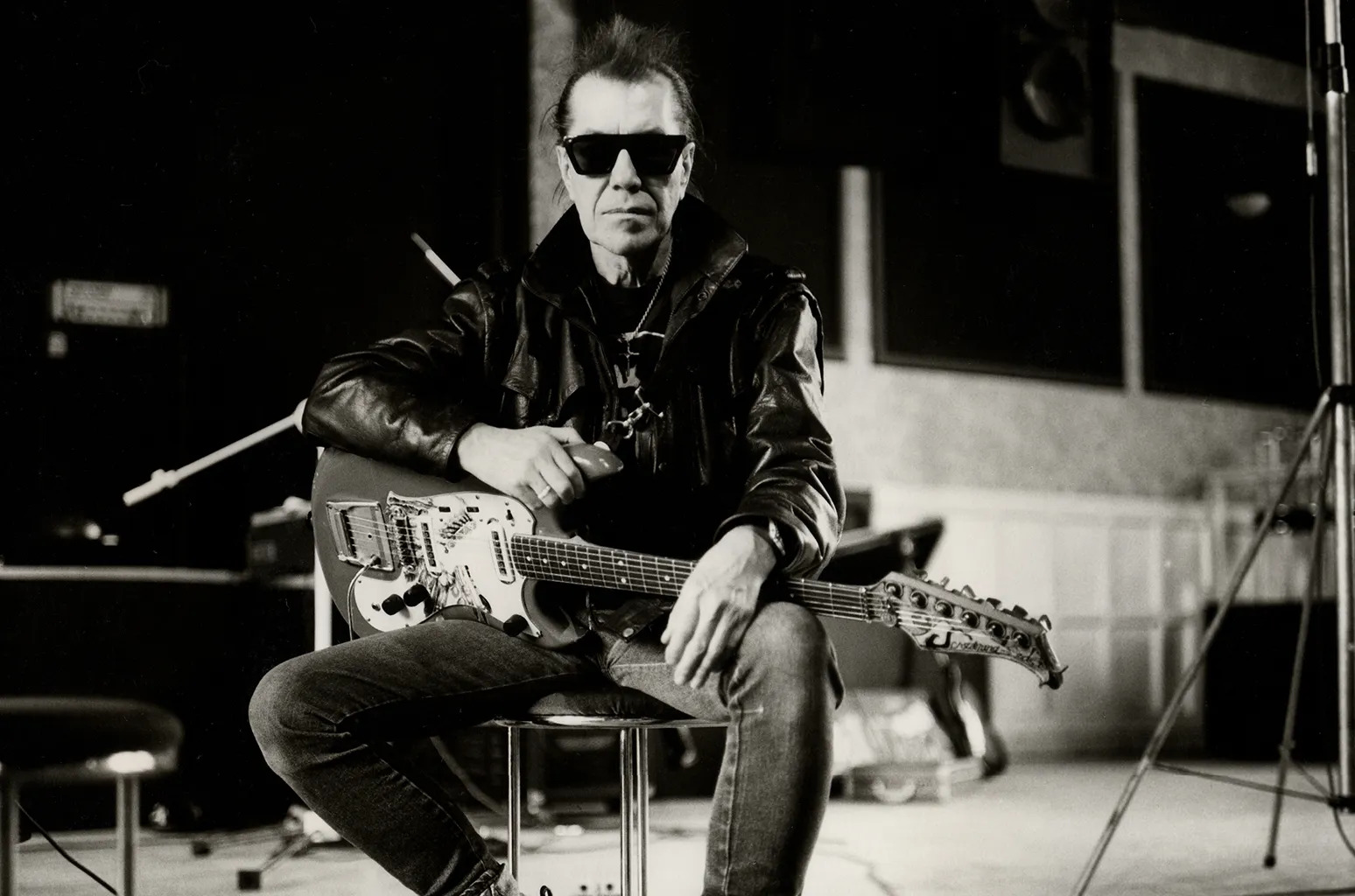
Photo Credit: Billboard
In the early years of rock and roll, Link Wray emerged as a pioneering and influential guitarist and songwriter. He was born of Shawnee descent in 1929 in the small town of Dunn, North Carolina. He grew up in deep poverty and faced discrimination due to his heritage. At the age of 8 he began learning how to play guitar from a traveling circus musician named “Hambone”. During his teenage years, he performed in a swing band with his brothers, gaining early experience that would shape his future career.
He went on to serve in the Korean War, and during this time he contracted tuberculosis, which led to the removal of one of his lungs. This affected his singing, so he decided to focus on instrumental music. In 1958, Wray released the single “Rumble”, which charted on the Billboard Hot 100 for 14 weeks, peaking at number 16 and selling over a million copies. “Rumble” was a track that experimented with and popularized the use of heavy distortion, reverb, and the power chord, which Wray invented himself. This gave the song a harsh and “dangerous” sound, causing it to become the first instrumental ever banned on the radio.
Link Wray went on to build a career that spanned more than 20 albums that were defined by experimentation and a dedication to doing things his own way. After the success of “Rumble,” he went on to release tracks like “Raw-Hide” and “Jack the Ripper” which also followed the harsh and distorted sound of his guitar style. Although he never had a constant presence on the charts, his career had a major impact on the future landscape of rock and roll music. Many major musicians have pointed to Wray as a key influence, including Pete Townshend, Iggy Pop, Neil Young, and Jimmy Page. Page even said, “As a guitar instrumental, the attitude of Rumble was totally unique in its mystery, imagination, and execution. It had a profound effect on me.”
His playing was foundational in many later genres like hard rock, punk, and metal. In the 90s, his work was brought to light in popular films such as Independence Day and Pulp Fiction, which introduced him to a younger audience. Although much of his influence was unrecognized in his lifetime, he was eventually inducted into the Rock & Roll Hall of Fame in 2023, solidifying his place in music history.
Jimi Hendrix
Written by James Harris
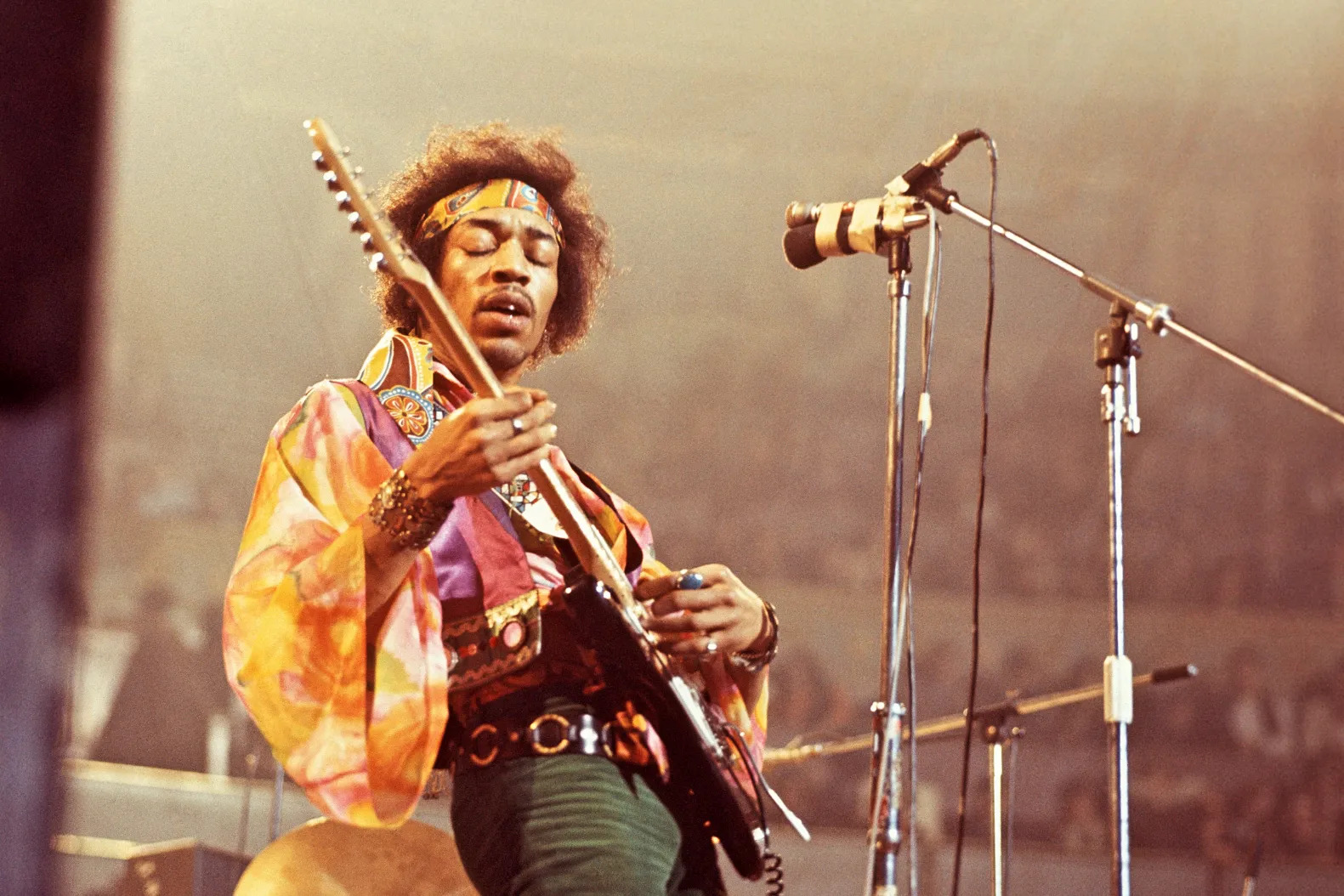
Photo Credit: Rolling Stone
Jimi Hendrix was a groundbreaking guitarist and songwriter whose identity and heritage significantly influenced his self-perception as well as his artistic expression. Born in Seattle in 1942, Hendrix came from a diverse background that included African American, European, and Cherokee ancestry through his grandmother, Nora Rose Moore. He often spoke about this connection and incorporated it into his personal style. From the clothing he wore onstage to the imagery he envisioned for his album art, his sense of identity wasn’t just cultural but emotional. Shaping the way he moved through the world and the stories he told through music.
His sound blended rock, blues, jazz, funk and psychedelia into something completely new, and his approach to the guitar reshaped what people thought was possible on the instrument. Hendrix’s catalog shows how deeply he drew from a wide range of influences. With songs like “Little Wing” having a soft, almost spiritual tone that he described as being inspired by a “simple Indian style,” while “Castles Made of Sand” uses Native imagery to explore themes of hope, struggle, and resilience. Over the course of his short but monumental career, Hendrix was inducted into the Rock & Roll Hall of Fame, and his debut album, Are You Experienced, was added to the U.S. National Recording Registry. His music continues to empower listeners because it carries both vulnerability and strength, and it remains a bridge between cultural experiences, emotional expression and musical innovation.
Jesse Ed Davis
Written by Abby Rhomberg
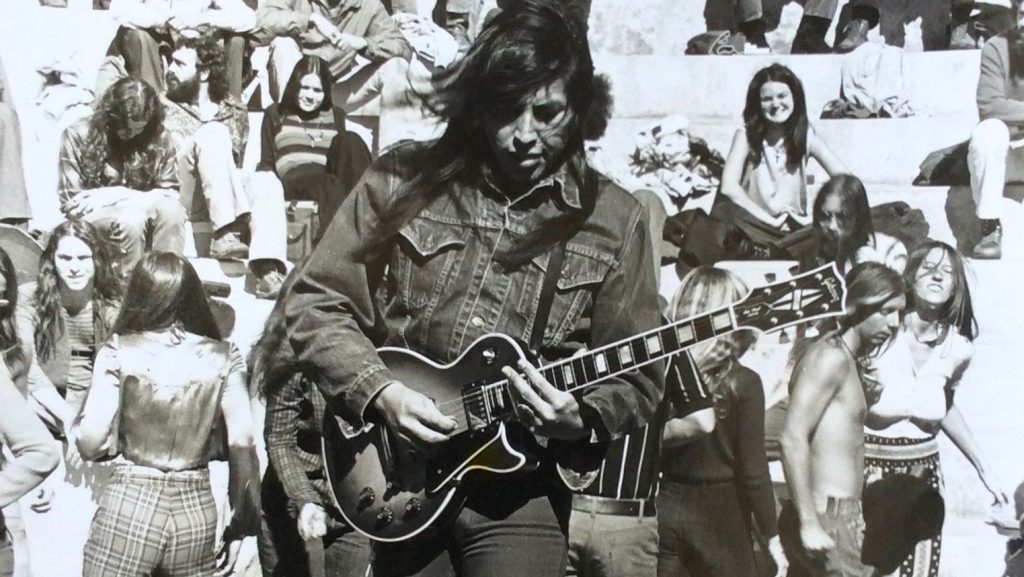
Photo Credit: Native American Calling (NAC)
Called a rock hero’s “secret weapon,” by the New York Times, and a “guitar heroes guitar hero,” by Vintage Guitar Magazine, Jesse Ed Davis is undoubtedly a hidden gem in the music industry. Jesse was born in Norman, Oklahoma in September of 1944. His father, who was a noted American Indian artist, was Comanche, and his mother was Kiowa. He graduated from Oklahoma City’s Northeast High School in 1962 and briefly enrolled at the University of Oklahoma, with a plan to become an English teacher. He eventually joined Conway Twitty’s band and moved to California in the mid-1960s. The Oklahoma Historical Society writes that “From then into the 1970s Davis’s guitar prowess made him a much-sought-after session guitarist.”
This same prowess led Jesse Ed Davis to become one of the most influential and distinctive guitarists of the late 60s and early 70s across genres of blues, country, and rock. He was featured on the albums of big-name artists such as Eric Clapton, Bob Dylan, Jackson Browne, Leonard Cohen, and George Harrison, to name a few. If that list isn’t impressive enough, the Native American Music Association points out that, “He was John Lennon’s friend and guitarist of choice…He played country with Willie Nelson, soul with Marvin Gaye, blue with B.B. King, pop with Neil Diamond, and folk with Arlo Guthrie.” Davis was inducted into the Native American Music Hall of Fame in 2018 during the 18th Annual Native American Music Awards. This recognition came after his induction into the Oklahoma Jazz Hall of Fame in 2002 and the Oklahoma Music Hall of Fame in 2011. The Native American Music Association, which is “devoted to bringing Indigenous music to the world’s consciousness,” highlights Jesse as a tried-and-true example of an Indigenous individual conquering a space not typically thought of as theirs.
According to the Oklahoma Historical Society, Davis described his music theory by saying, “I just play the notes that sound good.” He had a simple, soulful sound that he brought to the world using his three favorite guitars; the Telecaster, Stratocaster, and the Gibson SC. Not only would this sound show up directly on over 100 albums and recordings, but it would also come to inspire the playing and sound of several icons. Davis also recorded three solo albums titled Jesse Davis, Ululu, and Keep Me Comin. Even if you do not know his name, it is certain that Jesse Ed Davis is a musical legend.
Patrick and Candido Vasquez-Vegas: Redbone
Written by Lucille Wacker
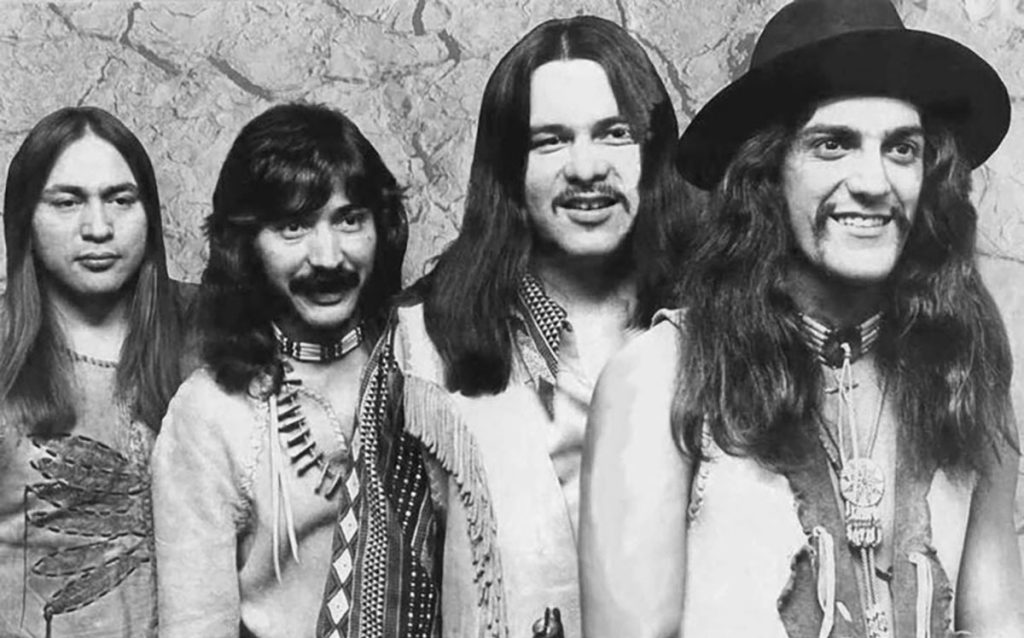
Photo Credit: Valley Music Hall of Fame
The Native American Brothers Patrick “Pat” and Candido “Lolly” Vasquez-Vegas were born in Coalinga, California in 1939 and 1941. Pat and Lolly, members of the Yaqui and Shoshone tribes, formed the popular Native American/Mexican American rock group: Redbone. Pat and his brother Lolly grew their passion for music and performing at a young age. The brothers were already a duo by the 1950’s and went on to back Jimmy Clanton, a popular American singer, early on in their careers. Pat and Lolly performed under many names and groups such as: the Vegas Brothers, The Crazy Cajun Catwalk Band, the Avantis, and the Sharks before Jimi Hendrix convinced the brothers to form an all-Native American rock group. The rock group consists of, of course; Pat and Lolly Vegas as well as Robert Anthony Avila, aka Tony Bellamy, and Peter Depoe. The band was officially signed to Epic Records in 1969 as “Redbone”, a reference to the Cajun Term for a mixed-race person. In 1970 the group released their self-titled debut album, Redbone.
Information gathered from:
University of Saskatchewan Buffy Sainte-Marie
Rock & Roll Hall of Fame Link Wray
North Carolina Music Hall of Fame Link Wray
USC Scalar Project on Hendrix and Native imagery Jimi Hendrix
Wikipedia on “Little Wing” Jimi Hendrix
Rock and Roll Hall of Fame Jimi Hendrix
Library of Congress Recording Registry Jimi Hendrix
Vintage Guitar Magazine Jesse Ed Davis
Native American Music Association Jesse Ed Davis